Search This Blog

Monday, March 6, 2017

Poetry 110: The Invitation


The Invitation.

 
Please,

enter the circle,

and make room for others.

 
Every one of us

is invited to this moment.


Every

single

one of us.
 

Believe it or not,

there is room for us all.


So relax.

Step in

and exhale.


God smiles on all of us,

with the invitation

to be awake and alive.


Please accept it.


This space is yours

by divine right.


So touch the earth.


Just as Siddartha did

under the Bodhi tree, or

Jesus at the

Sermon on the Mount.


The offering is yours,

so take your portion with pleasure,

(but leave a share for your neighbor.)


Don't panic-

there is enough

to go around.


You

are

welcome. 
 
-Me

Friday, March 3, 2017

Spiritual Democracy: A Cultural Philosophy

I once heard an Evangelical Christian pastor with dreadlocks say on an NPR show: mixing church and state is like combining horse manure and ice cream.  It may not do damage to the manure, but it's sure gonna mess up the ice cream. 

And the truth is, I don't actually know if this person was saying religion was the ice cream or the manure...probably doesn't matter. It still makes a point. 

I've been thinking a lot about this topic in the past year though, especially in the context of U.S. news reports such as these:

1.)“In high school basketball games 400 miles apart, spirited rivalry gave way to racial strife when some students chanted 'Trump' as an epithet directed at Latino students...

'During the course of that game, a group of Andrean students produced signs and images of presidential candidate Donald Trump and began to chant 'Build that wall,' at the Bishop Noll team and fans, who are heavily Hispanic,' the Catholic Dioceses of Gary, which oversees both schools, said in a statement.”  CNN 3/1/16

2.) “The voices behind racist chants that disturbed black and Latina high school girls soccer players came from Wisconsin schoolchildren, officials revealed.

A friendly soccer match between the girls at Beloit Memorial and Elkhorn High School quickly turned into an ugly, racist mess on Thursday, as three elementary school girls yelled, 'Donald Trump, build that wall!' at the players of color on the field, Jason Tadlock, a district administrator for Elkhorn Area School District, told the Daily News.” New York Daily News 4/11/16

3.)“ROYAL OAK, Mich. — A viral video of middle school students at a Michigan school shouting 'build the wall' during a lunch hour Wednesday has sparked outrage across social media, leading some to demand that school district officials take action.”  USA Today 11/10/16

4.)“Election-related taunts of Hispanic students in Vice President-elect Mike Pence’s hometown of Columbus have prompted school administrators to call for civility and respect.

Those taunts have included chants of 'build that wall!' that made some students uncomfortable.”  IndyStar 11/12/16

And just this week:

5.)“Canton students and families have begun emailing Hartford's Classical Magnet School to express their regrets and support after a group of Canton High School students taunted Classical's basketball players with 'Trump' chants, which some found racially motivated, during a high-stakes varsity game this week.” Hartford Courant 3/2/17

Reading about these acts of bigotry by children left me aghast and scared.

As someone born in 1977 (13 years after the signing of 1964 Civil Rights Act) these events reminded me of images and stories I'd only seen second-hand of white teenage boys and girls spitting on, pushing, and yelling at African American boys and girls (including elementary school children) after the Supreme Court passed the Brown vs. Board of Education case to allow for racial integration in schools and beyond.

What vexed me further, beyond the report of bigotry itself, was that if you read a little further into most of these news articles, you would read something about the apparent dichotomy between "free speech" and "hate speech"- a debate I am beginning to loathe as it appears to be the only narrow response anyone can think to have.

Do not misunderstand me.  I believe the law (or government) absolutely has a central place in these growing number of incidents of bigotry just as the 1954 Brown vs. Board of Education Supreme Court decision was a necessary step for desegregation.

I also believe that religion may have a pertinent role here too; by either reinforcing civility through both the compassionate teachings of prophets in your own religion (e.g. love your neighbor as yourself in Christianity, the five precepts of Buddhism, or the acts of charity in Islam), and acknowledging the inhumanity of excluding a group of people from the protection of the 1948 Universal Declaration of Human Rights based on their religion.

However, I also want to definitively get to the root of why there is a growing number in the first place? AND, how are we as a community going to address it?

I have a hunch, it may have to do with culture.

Culture is something that has always fascinated me since my early undergraduate days as a Sociology Major.

According to Wikipedia, culture:

can be defined in numerous ways. In the words of anthropologist E.B. Tylor, it is 'that complex whole which includes knowledge, belief, art, morals, law, custom and any other capabilities and habits acquired by man as a member of society.' Alternatively, in a contemporary variant, 'Culture is defined as a social domain that emphasizes the practices, discourses and material expressions, which, over time, express the continuities and discontinuities of social meaning of a life held in common.' The Cambridge English Dictionary states that culture is 'the way of life, especially the general customs and beliefs, of a particular group of people at a particular time.'

Circling back to these new reports of children engaging in bigotry, unlike the law or government which says you can't do something because it is illegal, or religion which says you can't do something because it is a sin, culture asks you to consider your actions within the larger social and historical context- culture is transactional and acknowledges that no single individual and no single idea exists in a vacuum.

So what can be scary about culture?

Consider Rolfe from The Sound of Music.

If you haven't seen this movie or musical in a while, Rolfe is the 17 year-old blonde-haired blue-eyed German boy who starts out as a smitten teenager in love with the eldest Von Trapp daughter, Liesl.

However, by the end of the musical, sweet, wholesome Rolfe has transformed into a Nazi solider loyal to Hitler himself.

I'll tell you, growing up watching The Sound of Music every year on the television, the character of Rolfe terrified me.  I didn't understand how:
a.) someone's behaviors could change in such a dramatic way, and
b.) a society would permit behaviors that harmed others.

Now, my simplified answer to both would be: culture.

Off stage, the scary version of how powerful culture can be if it is unattended to, could be the 1983 case of Cheryl Araujo in which a woman was gang-raped by 4 men in a public bar in Massachusetts and nobody intervened to stop it.  Her story was later told in the 1988 Jodie Foster movie The Accused.

There may be an upside to culture too though.  And that may be a cultural philosophy of spiritual democracy.

What would this look like?

Many years ago I volunteered with an organization that was engaging communities in a project called Community Conversations on Race.  The details of the project I'll write about at another time, but what I'm remembering most about that time right now is, oddly, the T-Shirt they gifted me as a thank you on my last day.

Nobody's Born A Bigot.

Nobody.

Okay, if that is true (and to be clear, I believe that it is), then what happened to Rolfe? What happened to those elementary school girls at the soccer game?

They learned bigotry (discriminatory thoughts and behaviors) from our larger culture which begs the question: how do we as a community address cultural bigotry without merely relying upon The Ten Commandments and/or The U.S. Constitution?

A spiritual democracy.

A spiritual democracy would be closer to what I believe Bono, the lead singer of U2 is talking about when he repeatedly says in interviews that "America is not just a country, it is an idea."

It would be more like a planetary version (yes, I dream big!) of my 7 year-old son's award winning character education program in his public school that is day in and day out teaching, modeling and reinforcing what they call "character ideals" that form the "foundation of the school culture."

(See, there's that word again: culture.)

A spiritual democracy would be more like a cultural philosophy; similar in nature to the impact of the 19th century transformative philosophy of transcendentalism.

By using culture as the container for a healthy democracy, as opposed to strictly manure or ice cream (I mean government or religion), then you would not need court houses or temples to be present at every single high school football field  in order for civility, decency and dare I say compassion to reign. 

If culture is transactional, as opposed to merely top-down, then this model of pro-social behavior would be more truly "of the people, by the people and for the people."

Therefore, a cultural philosophy of spiritual democracy, in addition to humane laws and religious moral codes, may actually increase our national and global possibility that democracy will be upheld over time.

May it be so.


Thursday, March 2, 2017

A Time for Stillness & Quiet

For the last 14 months, amid the noise, disappointment and clamor of the U.S. Presidential Election, my mother has been treated intensively for Stage 3 Breast Cancer.

It has felt like a parallel process.

The course of treatment included 4 surgeries, 7 months of (more than one) chemotherapy infusions, 6 weeks of daily radiation treatment, and 8 months of physical therapy- the cancer treatment that is...

Two weeks ago, on the same day my husband was having surgery,  my mother told me her doctors are recommending another surgery for her.

I was speechless.

Since that announcement, I've been thinking about the poem by 20th century Chilean poet and diplomat Pablo Neruda (1904-1973)


that is called "Keeping Quiet." It goes like this:

Now we will count to twelve
and we will all keep still.

For once on the face of the earth,
let’s not speak in any language;
let’s stop for one second,
and not move our arms so much.

It would be an exotic moment
without rush, without engines;
we would all be together
in a sudden strangeness.

Fisherman in the cold sea
would not harm whales
and the man gathering salt
would look at his hurt hands.

Those who prepare green wars,
wars with gas, wars with fire,
victories with no survivors,
would put on clean clothes
and walk about with their brothers
in the shade, doing nothing.

What I want should not be confused
with total inactivity.
Life is what it is about;
I want no truck with death.

If we were not so single-minded
about keeping our lives moving,
and for once could do nothing,
perhaps a huge silence
might interrupt this sadness
of never understanding ourselves
and of threatening ourselves with death.
Perhaps the earth can teach us
as when everything seems dead
and later proves to be alive.

Now I’ll count up to twelve
and you keep quiet and I will go.


Exquisite, no?

It reminds me of the essence of author Pico Iyer's writings and essays about stillness and quiet-


which I seem to be needing lately because I've scoured the internet and his blog (http://picoiyerjourneys.com/) for articles and interviews on these very same topics.

But now, I feel like I need to put all of my reading (on the internet or otherwise) away.

I once heard an acoustic ecologist named Gordon Hempton, founder of an organization called The One Square Inch of Silence say:

Quiet can be quieting.

I couldn't agree more. 

So this weekend, serendipitously, I am scheduled to attend an all-day mindfulness meditation retreat at The Center for Mindfulness, and the timing couldn't be more perfect.

If stillness and quiet are what I am craving, then eight silent hours turned inward--without electronics, CNN or even conversation--is exactly what the doctor ordered.

In an interview with Krista Tippett on NPR on the topic of his book The Art of Stillness, the also well-known travel writer Mr. Iyer had said,

I noticed when I began travelling a lot 30 years ago, I would talk about going to Cuba or going to Tibet, and people's eyes would light up with excitement. And nowadays, I notice that people's eyes light up most in excitement when I talk about going nowhere or going offline.  And I think a lot of us have the sense that we're living at the speed of light, at a pace determined by machines [and politics]. And we've lost the ability to live at the speed of life.

I have found this to be true as well when I tell others I am going on retreat.

It's like people know that our current pace in the modern western world is not sustainable, yet up till now, we have not learned the necessary strategies and capabilities to set the appropriate limits in order to thrive in it.

Mr. Iyer offered up his own solution to this dilemma in a 2009 The New York Times article called "The Joy of Less" about his minimalist life outside of Kyoto, Japan.

I’m no Buddhist monk, and I can’t say I’m in love with renunciation in itself, or traveling an hour or more to print out an article I’ve written, or missing out on the N.B.A. Finals. But at some point, I decided that, for me at least, happiness arose out of all I didn’t want or need, not all I did. And it seemed quite useful to take a clear, hard look at what really led to peace of mind or absorption (the closest I’ve come to understanding happiness). Not having a car gives me volumes not to think or worry about, and makes walks around the neighborhood a daily adventure. Lacking a cell phone and high-speed Internet, I have time to play ping-pong every evening, to write long letters to old friends and to go shopping for my sweetheart (or to track down old baubles for two kids who are now out in the world).
 
When the phone does ring — once a week — I’m thrilled, as I never was when the phone rang in my overcrowded office in Rockefeller Center. And when I return to the United States every three months or so and pick up a newspaper, I find I haven’t missed much at all. While I’ve been rereading P.G. Wodehouse, or “Walden,” the crazily accelerating roller-coaster of the 24/7 news cycle has propelled people up and down and down and up and then left them pretty much where they started.
 
While I agree with Mr. Iyer himself who says: I certainly wouldn’t recommend my life to most people, I have found it deeply validating to read through his ideas and personal a-ha moments about material and spiritual stillness and quiet, in order to clarify my own need to follow Pablo Neruda's recommendation that we all take time to keep still while we count up to twelve.
 
May you find your own stillness and quiet in the coming days too. 

Monday, February 27, 2017

A Small Spiritual Life

During political and social times such as these, I worry that my spiritual life may be too small.

I have a feeling though, I am not alone in this.  And not just in terms of a spiritual life.

A few weeks ago I read a blog by a well-known author of many books (Dani Shapiro) that began like this:

During the past several days I have started to write a post, and then stopped.  Started, then stopped.  And I’ll tell you exactly the thought process, verbatim, that has raced through my mind each time I sat down to write.  Who cares?  Why me?  How can writing possibly help with the state of the world is in such profound chaos?  What makes me think I have anything to contribute? Isn’t writing somehow self-indulgent? Shouldn’t I be out there in the world, at every possible waking moment, making some sort of real difference?

After reading her post, which was entitled "On Doing What We Can" by the way, I thought to myself:

"Hugh, I guess I'm not the only one."

Even though the 20th Century Christian bodhisattva Mother Teresa reminded us:


Not all of us can do great things. But we can do small things with great love, I struggle at times in my spiritual journey to walk the fine line between humility vs. complacency, acceptance vs. helplessness.

This feeling came to a head for me on January 21, 2017, the day of the world-wide Women's March.

This march, protesting the election and exclusionist political platform of the newly inaugurated President of the United States, was so large that it is now being called the "largest protest" in history.

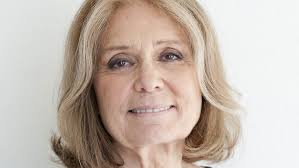
And I'd like to say I was there (or at least at my local state capital building) when 82 year-old feminist icon Gloria Steinem


stood before a crowd of hundreds of thousands in the nation's capital and told protestors (women, men and children) how her German friend reminded her earlier that day that: "We in Berlin know that walls don't work,"...but I wasn't. 

No, I spent most of that unusually warm and sunny winter day at the local library and playground with my 2 gorgeous children before visiting with my aging mother; sadly, on that particular day, my spiritual life felt very small.

It didn't help that I read this other statement by my hero Ms. Steinem in the L.A. Times:

Pressing send does not allow us to empathize with other people. ... If you hold a baby you’re flooded with empathy. If you see somebody in an accident you want to help them. I love books, but [empathy] doesn’t happen from a book. It doesn’t happen from a screen. It only happens when we’re together.

This wise testimonial reminded me of the famous quotation by German anti-Nazi theologian and pastor Friedrich Niemöller (1892 – 1984) who said:

Since that day I've been trying to think outside the box for ways that I may be able to connect my spiritual life and practice with something greater, and as a first step, ironically, I'm trying to think small- as in, achievable now.

For example, when I went on my first 5-day silent Mindfulness Meditation Retreat I remember being moved by this instruction on the very first page of the orientation manual for the retreat:


It's a little bit small and hard to read, but what it says at the bottom of the page is: May your practice benefit all.

To me, this is a beautiful intention.

If we choose to, we could offer our meditation practice (yoga practice, prayer practice) as a radical gesture of peace, hope and loving generosity.

In his 2002 book One Dharma: The Emerging Western Buddhism, Buddhist teacher, author and cofounder of the Insight Meditation Society Joseph Goldstein writes in his chapter on "Compassion:"

Our dharma practice cannot help but benefit the world.  As our minds become purified of those forces that create suffering, the habits of greed and hatred and ignorance, the world is that much freer of the many consequences of those mind states.

Reading these words lightens my unease about my "small" spiritual life in order to remind myself of its mighty value.

But then, in the same paragraph, Mr. Goldstein goes on:

But what would it take to go from the understanding that our practice will inevitably help others to making the welfare of others the very motivation to practice? Knowing our own limitations, can we realistically put this altruistic motivation right at the beginning? And what would be the effect of doing so?

And just like that, my unease returns.

But maybe that is okay.  And maybe it is not unease, but rather a tension inside of me that is actually a spiritual growing pain for the potential of a larger spiritual life that I have yet to imagine.

Could this be?

We will find out...